Author: KM Editorial | Kun Motors
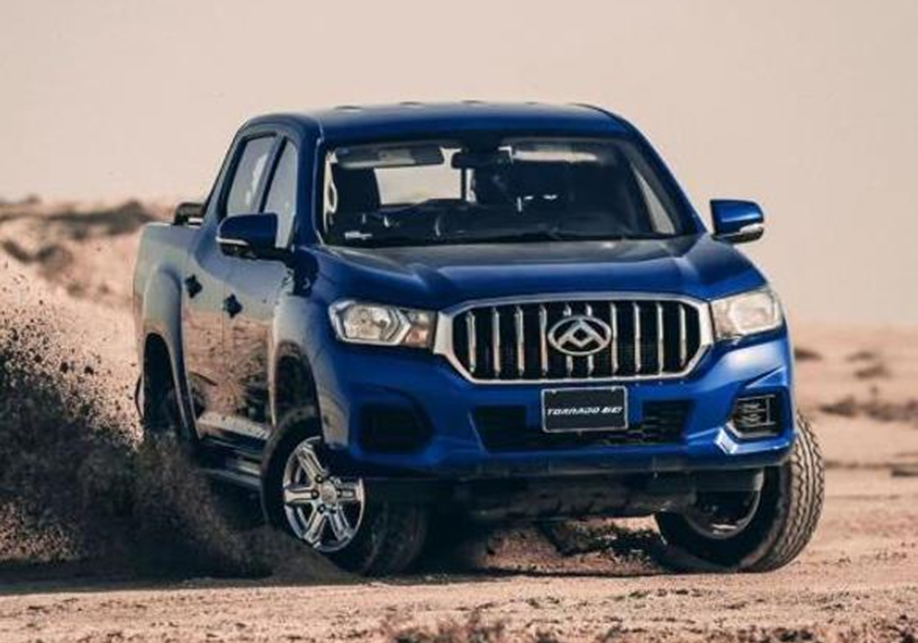
For decades, the equation in East Africa has been simple: need a pickup or SUV? Import a used Toyota from Japan. A 2019 Hilux Double Cab 4WD with 80,000 km on the clock will cost you roughly KES 5,000,000–5,700,000 ($38,000–$44,000) landed in Nairobi. A 2021 Fortuner 4WD? Around KES 6,900,000 ($53,000). No warranty, no certainty about its real history, and the clock is ticking on parts wear.
This model worked when new vehicles were simply out of reach. A brand new Hilux starts at KES 7,500,000 ($58,000), and a new Fortuner at KES 9,500,000 ($73,000). The gap between new and used was too wide to bridge.
That gap is closing — fast.
The New Math
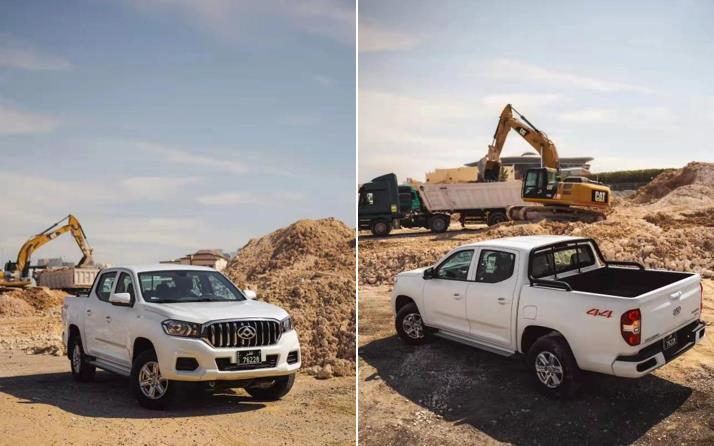
A new generation of Chinese-manufactured pickups and SUVs now enters the East African market at price points that overlap directly with 4–6 year old Japanese used vehicles. Consider the comparison:
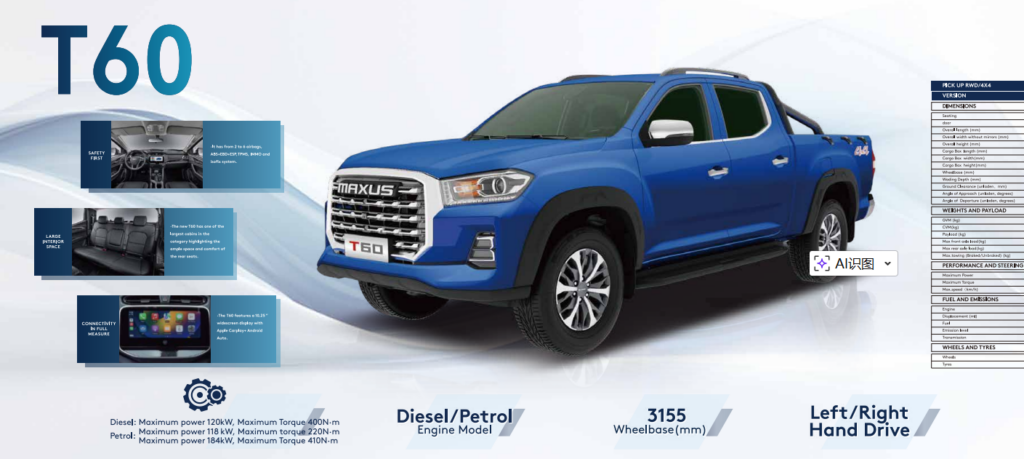
- A brand new, zero-kilometer SAIC MAXUS T60 Double Cab 4WD — 2.0-litre turbo diesel, 120 kW, 400 Nm, 6-speed automatic, four-wheel disc brakes, ESP, hill start assist, hill descent control — lands in Kenya at approximately $33,000–$35,000.
- A 2020 Toyota Hilux Double Cab 4WD with 60,000–90,000 km — no warranty, unknown service history, aging components — sells for $38,000–$44,000.
The new vehicle is cheaper. And it comes with a 3-year/100,000 km factory warranty.
Beyond Price: What You Actually Get
The financial argument is compelling, but the operational argument is even stronger for fleet managers:
Zero deferred maintenance risk. A used vehicle’s service history is only as reliable as its paperwork. A new vehicle starts at zero — every component is fresh, every fluid is factory-spec, every seal is intact.
Warranty coverage. When a water pump fails at month 14, a new vehicle owner files a warranty claim. A used vehicle owner writes a cheque.
Predictable total cost of ownership. Fleet operators can model maintenance costs on a new vehicle with high confidence. Used vehicles introduce variance that breaks budgets.
Standardized parts pipeline. When you buy from an authorized distributor with an established parts supply chain, you know exactly where your filters, brake pads, and belts are coming from — and how fast.
The Reputation Question
The honest objection is brand perception. Toyota and Isuzu have earned decades of trust in East Africa. Chinese manufacturers are newer to the market, and some earlier entrants left mixed impressions.
But the landscape has shifted. SAIC — the parent company behind MAXUS — is the world’s seventh-largest automaker by volume. MAXUS vehicles are sold in 73 countries. The D90 SUV achieved a 5-star ANCAP safety rating in 2022. These are not experimental products.
The real question for fleet managers is no longer “Can I trust a Chinese vehicle?” It is “Can I afford to pay $10,000 more for a used Japanese vehicle with no warranty, when a brand new alternative exists at a lower price with full factory backing?”

What This Means for East Africa
Kenya’s new vehicle market grew 22% in 2025, driven by falling interest rates and pent-up fleet replacement demand. The government continues to tighten used car import rules — the age limit has been reduced to 7 years. The structural trend is clear: the market is moving toward new vehicles.
For construction companies, logistics operators, mining firms, agricultural businesses, and NGOs running fleets across East Africa, the old playbook of “buy Japanese used” deserves a fresh look. The numbers have changed. The products have changed. The smart money is paying attention.
Kun Motors is an authorized distribution partner for SAIC MAXUS in East Africa. Contact us to discuss fleet solutions for your business.