By KM Editorial | Kun Motors | March 2026
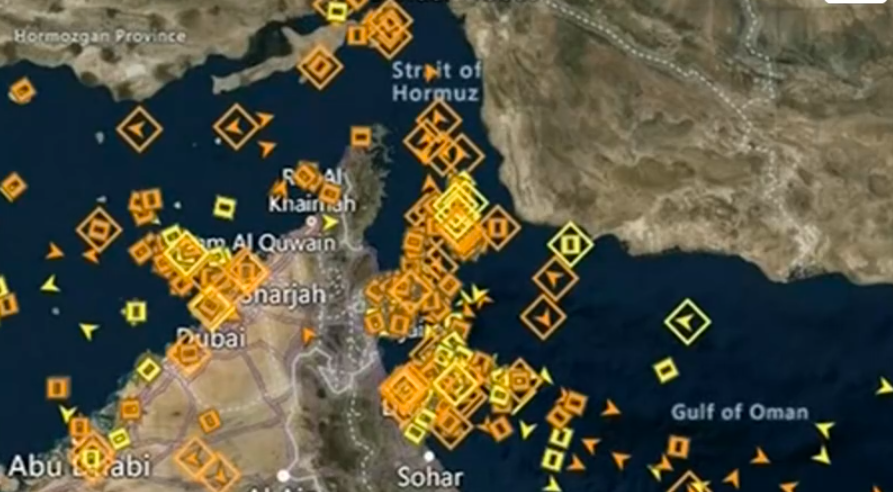
On March 1, 2026, smoke rose above Dubai’s Jebel Ali Port — the largest container terminal in the Middle East and the single most important transit hub for Chinese vehicle exports to the Gulf, Africa, and beyond. Within hours, the world’s top three container carriers — MSC, Maersk, and CMA CGM — had suspended all vessel crossings through the Strait of Hormuz. Hapag-Lloyd announced a $1,500 war risk surcharge per container. For international auto dealers who depend on Chinese vehicle supply chains, the question is no longer if this crisis will affect them — it’s how fast and how deeply.
Here’s what you need to know.
Dubai’s Role as China’s Auto Export Hub — Now Under Threat
The UAE emerged as China’s third-largest automotive export destination in 2025, trailing only Mexico and Russia. But more importantly, Dubai has served as the primary transshipment hub connecting Chinese vehicle manufacturers with buyers across the Middle East, West Africa, and North Africa. Chery and COSCO Shipping even built a 19,000-square-meter overseas warehouse at the Jebel Ali Free Zone — designed to cut delivery response times from weeks to days.
That infrastructure is now caught in the crossfire. While DP World announced that Jebel Ali resumed operations on the same day, major shipping lines have largely suspended services in the region. The ports may be technically operational, but when the carriers won’t sail, the result is the same: vehicles sit in limbo.
“Many Chinese car companies use Dubai as a transhipment hub to reach other Middle Eastern markets or West and North Africa,” one automotive trade professional told Chinese media outlet Caixin. “Now that this transit point has become unsafe, the entire operation is affected.”
The Numbers Tell the Story
To understand the scale of what’s at stake, consider the latest data:
- China exported 1.352 million vehicles in the first two months of 2026 alone — up 48.4% year-on-year.
- In February, BYD’s overseas sales surpassed its domestic sales for the first time ever, with 100,600 units shipped abroad.
- Chery led all Chinese exporters in February with 124,000 units shipped overseas.
- New energy vehicle exports (BEVs and PHEVs combined) surged over 100% year-on-year in the January–February period.
Chinese manufacturers are more dependent on international markets than ever before. Domestic sales in China fell 8.8% in the first two months of 2026, driven by reduced government subsidies and a longer-than-usual Chinese New Year holiday. For companies like BYD, Chery, and Geely, exports aren’t a side business anymore — they’re the growth engine.
And that growth engine just ran into a wall of geopolitical risk.
What This Means for Buyers in Africa, Central Asia, and the Middle East
1. Expect Delivery Delays and Freight Cost Increases
The Strait of Hormuz disruption doesn’t just affect Gulf-bound shipments. It creates a bottleneck that cascades across connected routes. Vessels that would normally transit through the Gulf to reach East African ports like Mombasa, Dar es Salaam, or Djibouti may now need to reroute — adding time and cost. Carriers that had hoped to return to the Suez Canal route after years of Houthi-related diversions are now facing a second major chokepoint closure.
For buyers, this means:
- Longer lead times — Plan for an additional 2–4 weeks on orders that would normally transit via the Gulf.
- Higher freight costs — War risk surcharges, fuel adjustments, and rerouting premiums are already being passed through.
- Insurance premium increases — Marine cargo insurance for Gulf-routed shipments has spiked.
2. Overland Routes Are Gaining Strategic Importance
The crisis is accelerating a shift that was already underway: the rise of China’s overland export corridors. The Khorgos Gateway on the China–Kazakhstan border has quietly become one of the most important nodes in China’s auto export network. Rail-based transport via the China–Europe freight routes offers an alternative that bypasses maritime chokepoints entirely.
For buyers in Central Asia (Kazakhstan, Uzbekistan, Kyrgyzstan) and parts of the Middle East reachable by land (Iran, Turkey), overland logistics are no longer just a cost-saving play — they’re a resilience strategy. Chinese exporters with established rail and cross-border trucking capabilities will have a significant competitive advantage during this period.
3. Vehicle Pricing May Actually Improve — for Savvy Buyers
Here’s the counter-intuitive part: despite rising shipping costs, the underlying price of Chinese vehicles may become more competitive for international buyers in the coming months.
Why? Because China’s domestic market is in a slump. Sales fell 15.4% year-on-year in February — the steepest drop in two years. A 5% purchase tax on new energy vehicles has dampened demand. Price wars at home are eroding margins. Manufacturers are under immense pressure to push volume overseas to maintain factory utilization.
This creates leverage for international buyers. Chinese OEMs and authorized exporters are competing harder for every overseas order. If you’re an established dealer with clear demand, this is a strong position to negotiate from — particularly on volume orders.
4. The 180-Day Rule Is Reshaping Supply Channels
Adding another layer of complexity, China’s new export regulation — effective January 1, 2026 — requires that any vehicle registered for fewer than 180 days must carry an After-Sales Service Confirmation Letter from the original manufacturer before it can be exported. This directly targets the grey-market practice of registering new cars domestically and immediately exporting them as “used.”
For legitimate international buyers, this is actually good news. It means:
- Vehicles coming through OEM-authorized export channels will have proper warranty and service documentation.
- Grey-market operators with spotty after-sales networks are being squeezed out.
- The market is shifting toward established, compliant exporters who can provide full documentation and after-sales support.
Work with exporters who hold valid MOFCOM-issued export licenses and can provide complete documentation chains. The days of low-cost, low-accountability grey exports are numbered.
How Kun Motors Is Positioned
At Kun Motors, we’ve built our export infrastructure around the principle that OEM-standard compliance isn’t optional — it’s the baseline. Our supply chain is designed to operate through multiple logistics corridors, including both maritime and overland routes, giving our partners flexibility that purely sea-freight-dependent exporters can’t match.
Whether you’re a dealer in Nairobi looking for pickup trucks, an importer in Almaty sourcing SUVs, or a fleet operator in Riyadh needing commercial vehicles, the current environment demands a partner who can:
- Navigate the shifting logistics landscape with established alternative routes
- Provide full OEM-backed documentation and after-sales service commitments
- Offer competitive pricing backed by direct manufacturer relationships
- Deliver transparency on shipping timelines and cost structures
The Middle East crisis will pass. But the structural changes it’s accelerating — the diversification of export routes, the professionalization of China’s export ecosystem, and the growing bargaining power of international buyers — are here to stay.
Contact Kun Motors today to discuss how we can support your sourcing and logistics needs during this period of disruption — and beyond.
This article is part of Kun Motors’ ongoing Insights series, providing international automotive professionals with timely analysis of China’s rapidly evolving export landscape. For more, visit our Insights page or contact our team directly.